Great variation in treatment methods cannot continue.
- Significant geographical disparities in the consumption of healthcare services and considerable variation in the way we treat patients cannot continue, believes consultant and professor Lars Engebretsen.
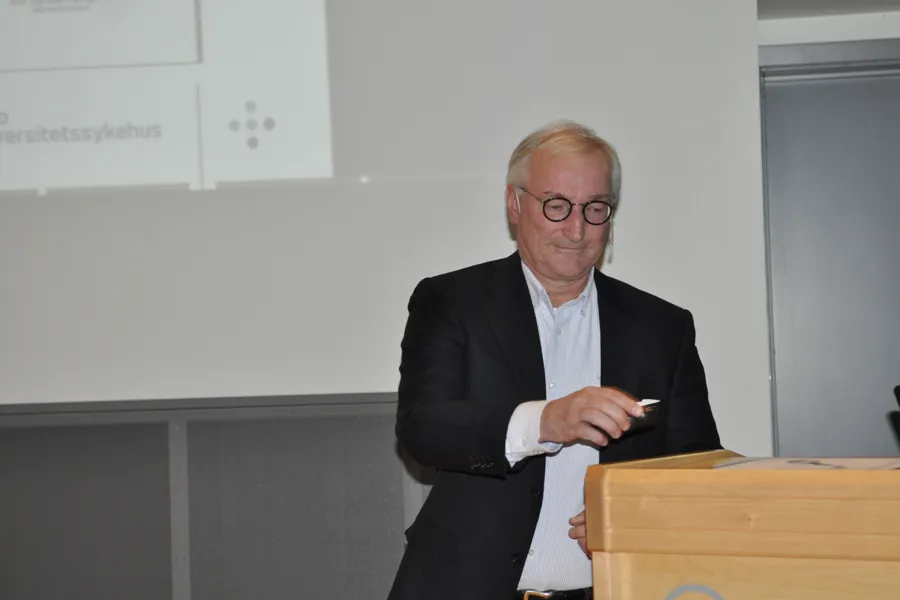
Photo: Prof. Lars Engebretsen
Helseatlas.no is a tool for comparing and presenting the population's consumption of healthcare services in different geographical areas. Helseatlas.no has been developed by Helse Nord's Centre for Clinical Documentation and Evaluation (SKDE).
The atlas presents 12 different day surgery procedures distributed by population size, showing that there are significant geographical differences in the availability of treatments.
- There must be very good professional justifications for defending inequalities. A national health atlas will be an important tool for providing greater equality in accessibility and a more uniform professional practice, says consultant and professor Lars Engebretsen at Oslo University Hospital/University of Oslo.
Significant variations in specific areas
Helse Nord RHF and Helse Vest RHF have, in collaboration with the Norwegian Directorate of Health, been tasked by the Minister of Health to develop the national atlas service. The first results for the 12 most common day surgery diagnoses were presented at the launch of helseatlas.no at Helse Nord's Centre for Clinical Documentation and Evaluation in Tromsø.
You can see the results at www.helseatlas.no
- The significant variations we observe, for example in shoulder surgery, may indicate that we have an overuse of operations for this type of condition in parts of the country. In collaboration between health authorities and professionals, we need to examine current practices. For conditions where conservative treatment, such as physiotherapy, is recommended before surgery, we must achieve a unified approach and common guidelines, emphasises Professor Engebretsen.
The pilot version of Helseatlas analyses the Norwegian population's consumption of 12 different types of day surgery procedures during the period 2011-2013.
Common method books are necessary
How easy is it to develop common guidelines?
- In orthopaedics, we have previously managed to reach agreement within the professional community on how to prioritise – which ailments and conditions should be treated first and last. It must be entirely possible to establish common guidelines for practice. Many hospitals have method books stating "this is how we do it here". Treatments that do not align with the recommendations must be specifically justified. In the USA, some insurance companies stopped paying for shoulder surgery unless the professional recommendation for physiotherapy had first been followed. This requires close and trusting collaboration between those responsible for services and the professional communities, and it takes some time, but we must get it done, stresses Lars Engebretsen.
Differences in morbidity, good capacity, and more private providers
What can explain the significant differences in consumption and clinical practice?
- There are several possible reasons. There may, of course, be differences in morbidity that need clarification. Hospitals with good capacity for planned surgery and professionals with expertise in specific areas may lead to a high number of such procedures being performed. This will not always be equally well justified from a professional standpoint. Many private hospitals with expertise in this area can also contribute to high consumption. Therefore, it is crucial that we have guidelines for how treatment should be conducted. This relates to prioritisation; patients should not undergo a procedure unless it is the best alternative, and it concerns resource utilisation, concludes consultant and professor Lars Engebretsen.
The atlas consists of an interactive map of Norway with accompanying fact sheets for each procedure. Additionally, there is a report that explains the methodology and provides a more detailed description of each condition and procedure.