KPR data provides new analytical opportunities.
SKDE has, for the first time, gained access to data from the Municipal Patient and User Register (KPR). The data will, among other things, help to improve the health atlases even further.
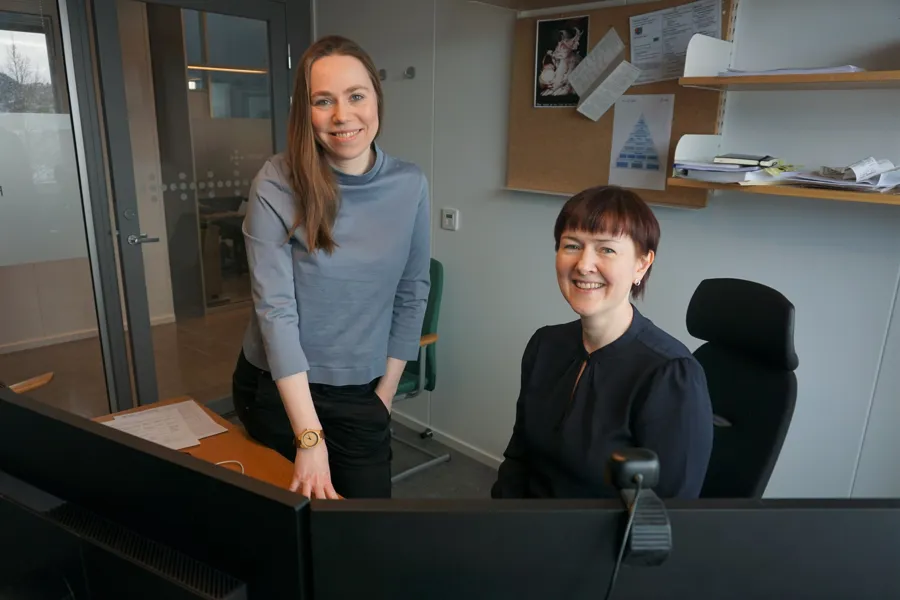
Photo: Randi Solhaug
Access to the KPR marks a milestone for the Centre for Clinical Documentation and Evaluation (SKDE), as data from this register will significantly expand the possibilities for data analysis within the analysis section.
All 11 health atlases that have been created so far have been based on data from the specialist health service in the Norwegian Patient Register (NPR). However, analysts at SKDE have not had access to figures from the primary health service — until now.
Can follow the entire treatment pathway
The acting head of the analysis section at SKDE, Hanne Sigrun Byhring, is very pleased that they can now utilise both NPR data and KPR data in their analyses. She believes this will provide them with a broader overview and fill in the gaps where they have previously questioned findings they have made.
For example, they have sometimes observed significant geographical variations in the use of the specialist health service in their analyses. They have wondered whether this was a genuine variation or rather a reflection of a division of functions between the specialist health service and the municipal health service.
— We saw this, for instance, when we analysed patients' use of the specialist health service during the postpartum period. One might think that some patients have received all their follow-up care in the primary health service and therefore did not need to be referred to the specialist health service. But we cannot really know anything about that when we only have data from the specialist health service. The advantage of having access to figures from both registers is that we can now follow individuals from the moment they contact the primary health service and onwards in their treatment pathway. Hopefully, we can get answers to the findings we have previously wondered about, explains Byhring.
Will improve health atlas
The next health atlas from SKDE is currently being prepared and will focus on chronic diseases. This will be the 12th atlas in the series, but the first to incorporate data from both patient registers.
— This will be very important, as patients with chronic diseases often receive treatment at both levels. It will be interesting to take a closer look at how treatment varies in terms of geographical distribution, age, and gender. There is much to explore and examine here, says Hanne Sigrun Byhring, adding:
— As we gradually begin to update previous health atlases, the KPR data will provide us with new opportunities to explore and fill in gaps. While we previously could say, “we believe this may be unjustified variation”, we can now be a bit more certain. We can likely conduct more in-depth analyses than before, and they may be more comprehensive, exciting — and hopefully even more useful.
Provides useful governance information
Since the KPR was established by the Norwegian Directorate of Health in 2018, it has collected and made available updated and quality-assured health data from Norwegian municipalities. Therefore, the KPR provides a solid foundation for quality improvement, statistics, health analyses, research, innovation, and preparedness.
Byhring explains that data from the primary health service has therefore been in demand from professional environments that utilise the analyses from Health Atlas.
— We have wanted access to the KPR for a few years now, and it is thanks to the four regional health authorities (RHF) that we have achieved this. It has been a goal for us to connect the two sources and view them in context so that we can obtain better analytical foundations. Such large data volumes do increase our work with facilitation, but we gain so much from the effort that it is no disadvantage, she believes.
According to the Norwegian Directorate of Health, the KPR also aims to contribute information and knowledge that can promote health, prevent illness and injury, and provide better health and care services. This is also SKDE's goal with Health Atlas, says Hanne Sigrun Byhring.