Heart attack patients should receive thrombolysis treatment more often.
Only 56 per cent of heart attack patients in Norway received thrombolysis treatment within the recommended time from 2015 to 2018. By offering more thrombolysis, more patients can receive treatment in a timely manner.
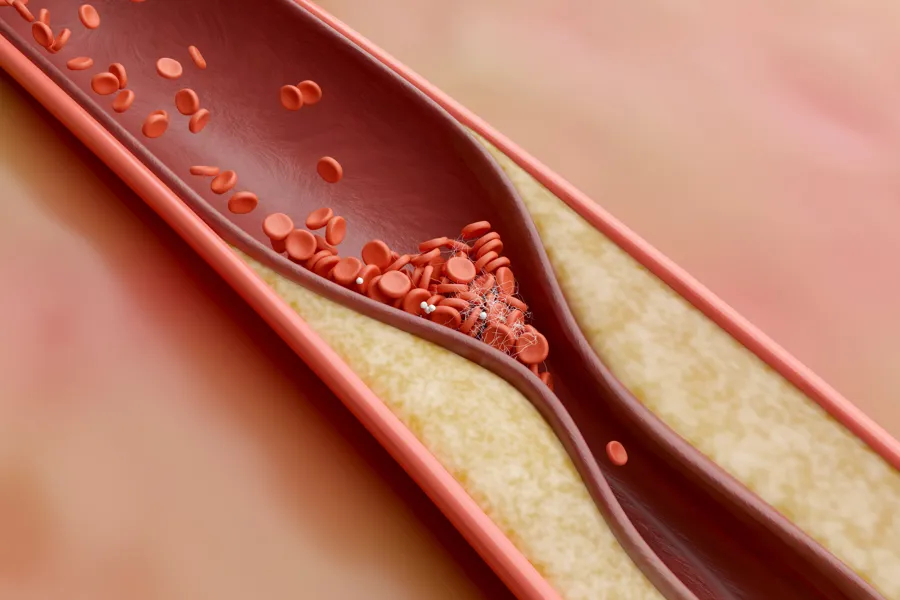
Illustration: Shutterstock
This shows a study on variation in the treatment of blood clots (reperfusion treatment) for patients with severe heart attacks during the period 2015—2018.
The study reveals significant geographical differences in treatment. While 81 per cent of heart attack patients in Oslo received reperfusion treatment within the recommended time, only 13 per cent of patients in Finnmark received the same.
The study is led by PhD candidate at the Centre for Clinical Documentation Bård Uleberg and several of his colleagues. They have utilised data from the Norwegian Heart Attack Register in their research on treatment variation, and the study was published in British Medical Journal (BMJ) in 2024.
Thrombolysis or PCI
Removal of blood clots in coronary arteries can be done in two ways. One method is a procedure called percutaneous coronary intervention (PCI) at a PCI centre. The other is through clot-dissolving medication (thrombolysis), which can be administered outside of a hospital, for example, at the patient's home or in an ambulance.
Regardless of which treatment is chosen, it should be administered within the recommended time – which is 120 minutes for PCI and 30 minutes for thrombolysis.
– What we see is that the treatment of heart attacks in Norway is generally very good, but we need to look for opportunities to improve even further. I am researching the reopening of blocked coronary arteries within the recommended time. This is an area where we in Norway can become even better, says Bård Uleberg.
Can treat more
Uleberg is primarily interested in why there is variation in treatment quality.
– We knew in advance that there is a wealth of good data in the heart attack register. We could see from published figures on kvalitetsregistre.no and in a report on quality indicators prepared by SKDE that there were significant geographical differences in reperfusion treatment for heart attacks. In my project, I am trying to understand why there is geographical variation and what it means for patients.
To shed light on which variables are significant for whether patients receive treatment within the recommended time, Uleberg has linked data from the Norwegian Heart Attack Register with data from other registers.
– We have linked quality register data with data from the Control and Payment of Health Refunds (KUHR), the Norwegian Patient Register (NPR), the Cause of Death Register, and Statistics Norway (SSB). This allowed us to examine other dimensions surrounding the treatment of heart attacks, such as service use beyond what is included in the heart attack register, income, and education, he explains.
The study shows that the significant geographical differences primarily relate to the length of travel time to the treatment location. Uleberg and colleagues find no or only minor effects of socioeconomic factors (education level, post-tax income) or gender.
– What I find most striking is that 51 per cent of patients had a travel time of over an hour to a PCI centre, yet only 16 per cent of patients in Norway received thrombolysis. Our study shows that there is potential to treat more patients within the recommended time by using thrombolysis more, especially in sparsely populated areas.
Sees many advantages
Uleberg is trained as a sociologist and is very pleased to be able to use data from a medical quality register in his research.
– As a sociologist, I have a much better foundation for researching treatment quality in heart attacks. The quality indicators are professionally grounded in the register. This means that the professional community itself has determined what constitutes good treatment quality, providing me and others without a medical background a solid basis for researching variation in treatment quality and the consequences of both good and poor treatment, says Uleberg.
He further discusses several other positive aspects of using quality register data in research.
– I receive excellent medical expertise support for my project. The register management is involved and supports the research. Additionally, quality register data provide very secure patient inclusion – the data are validated, and there is a high coverage rate, Uleberg points out.

Photo: Ørjan Marakatt Bertelsen