Patient-reported data:
Common with diabetes-related stress
Concerns about the future, complications, and feelings of burnout are common among adults with type 1 diabetes. This is shown by a new study based on patient-reported outcome measures (PROMs) from 10,000 patients.
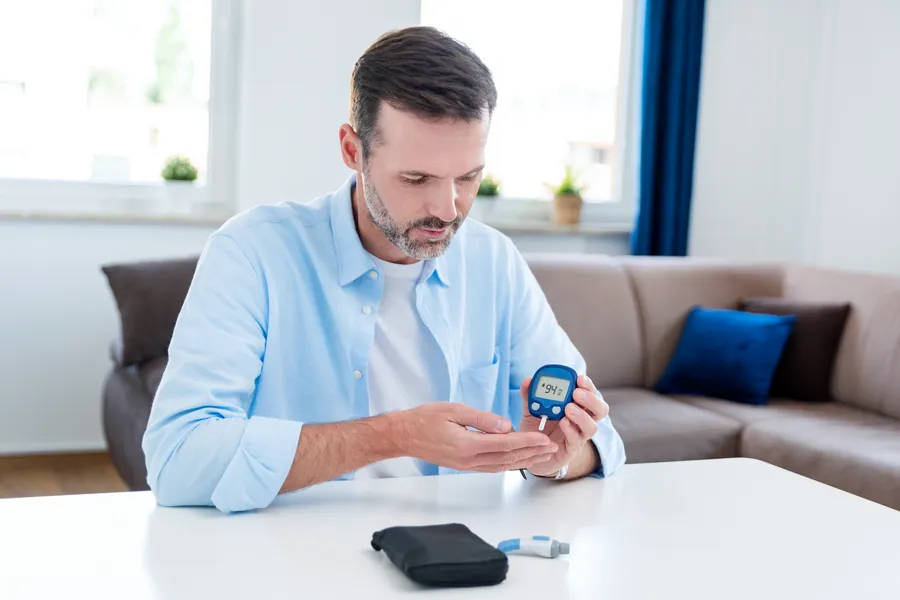
Photo: Colourbox
Type 1 diabetes is a chronic condition that not only requires regular medical follow-up but also significant self-management in daily life. Each day, a person with type 1 diabetes must make choices related to blood sugar monitoring and regulation, insulin supplementation, food intake, and physical activity.
To learn more about how individuals with diabetes perceive their daily lives, a new Norwegian study has mapped the diabetes-related problem areas that adults with type 1 diabetes report themselves. The study utilised patient-reported outcome measures (PROMs) from the Norwegian Diabetes Register for Adults (NDV). Using this data, researchers examined how 10,186 patients assess their own situation and which problem areas they report as the most serious and challenging.
The researchers specifically focused on diabetes-related stress and worry, internationally known as diabetes distress. The five most common stressors reported by the patients were:
- Concern for the future and diabetes complications
- The feeling that diabetes takes too much energy in daily life
- Feeling burnt out from the self-management that diabetes requires
- Guilt that the self-management is not good enough
- Worry about hypoglycaemia (low blood sugar)
More insight into diabetes and life management
The lead author of the study is Ingvild Hernar, a diabetes nurse and postdoctoral researcher at Haukeland University Hospital, as well as an associate professor at the Western Norway University of Applied Sciences.
She points out that much research in the field of diabetes focuses on glycaemic control, which refers to the ability to regulate and maintain blood sugar levels within a desired range. This is often measured using long-term blood sugar (HbA1c). Therefore, research often explores new types of insulin, insulin pumps, and methods for glucose measurement. She believes this is, of course, important, as optimal glycaemic control is necessary to prevent—or ideally avoid—the development of diabetes complications.
In this study, however, the focus has been on the psychosocial challenges associated with living with type 1 diabetes, as it is the individuals themselves who manage their treatment on a daily basis.
Vi fant at det var en sammenheng mellom høyere diabetes distress-skårer og høyere HbA1c (langtidsblodsukker).
— Thus, one can imagine that "how one feels about their diabetes" influences self-management and, consequently, glycaemic control. The NDV collects data from several questionnaires. In this study, we have looked at the diabetes distress data. We found that there was a correlation between higher diabetes distress scores and higher HbA1c (long-term blood sugar). Research so far suggests that the relationship likely goes both ways. This means that elevated distress levels can negatively impact HbA1c, and that elevated HbA1c can also contribute to increased distress. Therefore, our study highlights that diabetes distress is also an important factor in diabetes research and clinical practice, Hernar explains.

Photo: Thor Brødreskift
Desires further research on registry data
The data material on which the study is based was collected in 2021. The NDV has also collected PROM data in 2023.
— I therefore think that one of the most important steps in research will be to begin analysing longitudinal data. Regarding clinical practice, we want to spread the message that mapping and addressing diabetes-related stress is something we should incorporate into the regular follow-up of individuals with type 1 diabetes. International diabetes guidelines have recommended this for many years, so it is high time that we in Norway follow suit, believes Ingvild Hernar.
— Do you think registry data should be used more in diabetes research?
— Yes, absolutely! The coverage for type 1 diabetes has become very good, and the data quality is also continually improving. All credit goes to those working in the registry for their targeted efforts that yield results, as well as all the clinicians who report data through Noklus Diabetes and now also the patients in the registry who share information through the questionnaires.
Hernar also highlights that the NDV, as far as she knows, has the largest data set on diabetes distress measured with the full version of "the Problem Areas in Diabetes scale" (PAID-20) in the world. PAID-20 is the questionnaire for measuring diabetes distress that is recommended internationally.
The study has recently been published in the journal Diabetes Care. Here you can read the entire research article.