— Not all treatment is in the patient's best interest.
SKDE has received a new national mandate: to help determine which investigations and treatments the specialist health service should reduce.
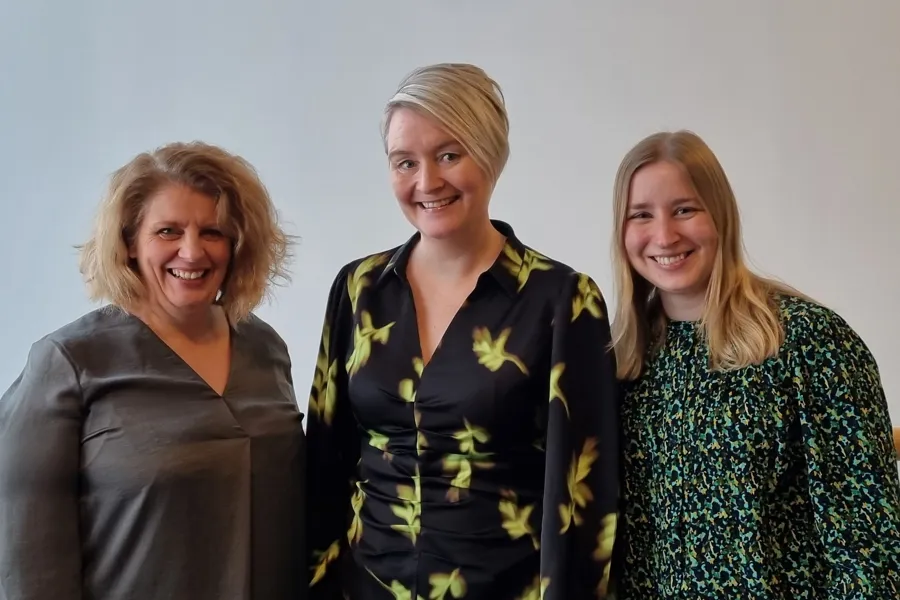
Photo: Kevin Thon
Three employees at SKDE have already started the work: medical advisor Marit Herder, senior advisor Line Grongstad, and analyst Elisabeth Pedersen. The assignment, which has been named “What should hospitals do less of?”, is a collaboration between the four regional health authorities in Norway and will be led by SKDE.
— In short, the assignment aims to reduce investigations and treatments that have low health benefits for patients. There needs to be less of these, so that hospitals can free up resources for what has a documented health benefit for patients – what actually works, explains Marit Herder.
Must Avoid Harm and Suffering
Several new treatment methods and diagnostic tools have strengthened today's healthcare system in the fight to make sick people well. At the same time, overdiagnosis and overtreatment have also become relevant and important issues. Therefore, it is necessary for health authorities to assess whether the investigations and treatments offered at Norwegian hospitals today provide sufficient health benefits for patients.
For in the worst case, they not only have low health benefits, but they can also be harmful to patients. Figures from the Norwegian Patient Injury Compensation show, among other things, that the most common reasons for treatment failures are that there was no basis for surgery/treatment (12%) and that incorrect treatment techniques/methods were used (33%).
— Not all treatment is in the patient's best interest. We talk in hospitals about “first, do no harm”, but the figures suggest that we are doing things today that can be harmful. We hope that this assignment can help contribute to fewer patient injuries in the future and better patient safety, says Line Strømhaug Grongstad.
Important for the Future
Another reason to consider what hospitals should do less of is to prevent overburdening the healthcare personnel who are to do the work. The future healthcare system must be structured to cope with more elderly and sick patients, despite the fact that we know there will be fewer hands to do the job.
— By reallocating resources and time to what we know works, rather than what has low health benefits, healthcare personnel can have better capacity to examine and treat more who truly need and benefit from the treatment. This can also contribute to shorter waiting times and fewer breaches of deadlines, says Marit Herder.
— Additionally, it is also a goal to reduce unwanted variation in patient treatment, so that all patients in Norway receive equally good treatment regardless of where in the country they live, says Elisabeth Pedersen.
Today, patients cannot take for granted that they will be offered the same treatment. Even within each regional health authority, there may be differences in the treatment offered, despite the existence of guidelines that are meant to be followed. To achieve a change across the country, “What should hospitals do less of?” is therefore a common assignment that all four regional health authorities are involved in.
Medical Professional Environments Involved
To succeed in reducing the use of unnecessary investigations and treatments, the medical professional environments will be involved in the work. The professional environments must help define which patients should receive, and which patients should not receive, investigations and treatments that there is currently agreement are being done too much. This will be done by appointing professional groups within areas where activity reduction may be relevant. The professional groups will consist of representatives from the four health regions in addition to other representatives where necessary.
Additionally, it is important to involve the management at the hospitals, so that the proposals are implemented in practice. Therefore, the chief medical officers of the four regional health authorities form the steering group for the assignment. In addition, the assistant medical directors of the regional health authorities sit in a national operational group (abbreviated as NOR) together with representatives from SKDE. NOR will propose which types of investigations and treatments the professional groups should consider. Furthermore, the group is responsible for following up and implementing the measures proposed by the professional groups in their region.
— There will be many discussions, and certainly not agreement on everything either. But this is a fixed assignment that will continue over time, so it will be exciting to follow, says Line Strømhaug Grongstad.