Significant differences in the follow-up of patients with MS, Parkinson's, migraine, and epilepsy.
Where you live in the country can influence the type of support you receive if you have chronic conditions such as MS, Parkinson's, migraines, and epilepsy.

Photo: Shutterstock
The results from the new health atlas for selected chronic diseases are presented. The atlas is divided into three parts. The first part will be published online on 29 April 2022 at 12:00 and concerns the neurological conditions migraine, MS, Parkinson's disease, and epilepsy.
Significant and unjustified variation has been found in several areas.
You can view the results from the health atlas and your catchment area here.
Migraine patients receive varying follow-up and are often signed off sick
Annually, approximately 58,000 patients were in repeated contact with the healthcare service due to migraine. This accounts for about 12 per cent of the estimated number of migraine patients in Norway. The severity of migraine varies, and this is likely part of the explanation for why only a small proportion of patients receive regular follow-up in the healthcare service. At the same time, migraine contributes significantly to the disease burden in the Norwegian population, according to the Norwegian Institute of Public Health (FHI).
– We find that 20 per cent of the sample were signed off sick at least once a year. On average, they were signed off sick three times a year due to migraine. This significant number suggests that many young adults with severe migraine, primarily women, live with considerable distress as a result of the condition. Given that the number of patients receiving repeated follow-up in the healthcare service is relatively low, and the use of specialist healthcare services is very limited, it appears that this patient group is not adequately cared for, says project leader Kristel Guldhaugen.
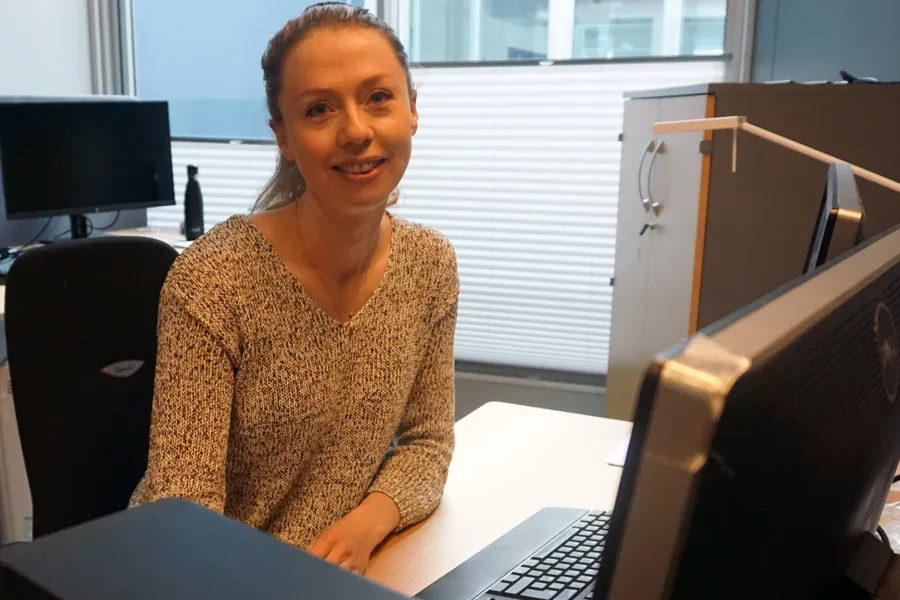
Photo: Randi Solhaug
MS patients have varying access to highly active medications
– Most patients with multiple sclerosis had contacts with both their general practitioner and specialist healthcare services during the period 2019—2021. However, there were significant differences across the country regarding who received treatment with so-called highly active medications, says Guldhaugen.
The use of highly active medications slows disease progression for MS patients. Unequal use of these medications is therefore serious, as it may mean that patients living in certain areas have a greater risk of functional loss as a result of their condition than patients living in other areas.
Far more Parkinson's patients than previously thought
Approximately 11,600 patients were treated annually for Parkinson's disease in Norway within general practice and specialist healthcare services. This is more than previously estimated (around 7,000). Findings in the health atlas also show that there was significant geographical variation in the use of specialist consultations for patients with Parkinson's disease. About 1,000 Parkinson's patients were, for instance, exclusively followed up by general practitioners.
Older people with epilepsy receive varying follow-up
When it comes to epilepsy, there are particularly large differences in the use of specialist consultations among older individuals aged 65 and over. While older patients with epilepsy residing in the Lovisenberg catchment area had 1.1 contacts with a specialist per year, patients in the catchment areas of Vestfold, Fonna, UNN, and St. Olavs had 0.5 contacts per year. This means that many older individuals with epilepsy do not receive follow-up in specialist healthcare services in accordance with the recommendation of at least one annual check-up.
There was also significant geographical variation in the use of specialist consultations for children. The number of specialist consultations per 1,000 children, for example, was twice as high for those residing in the Nordland catchment area compared to those in the Førde catchment area.
About the health atlas
The purpose of this health atlas has been to determine whether individuals with chronic diseases receive equitable healthcare services, regardless of where in Norway they live. The data has been sourced from the Norwegian Patient Registry (NPR) and the Municipal Patient Registry (KPR) during the period 2018—2021. Analysis, interpretation, and presentation have been conducted by the Centre for Clinical Documentation and Evaluation (SKDE), Health North.
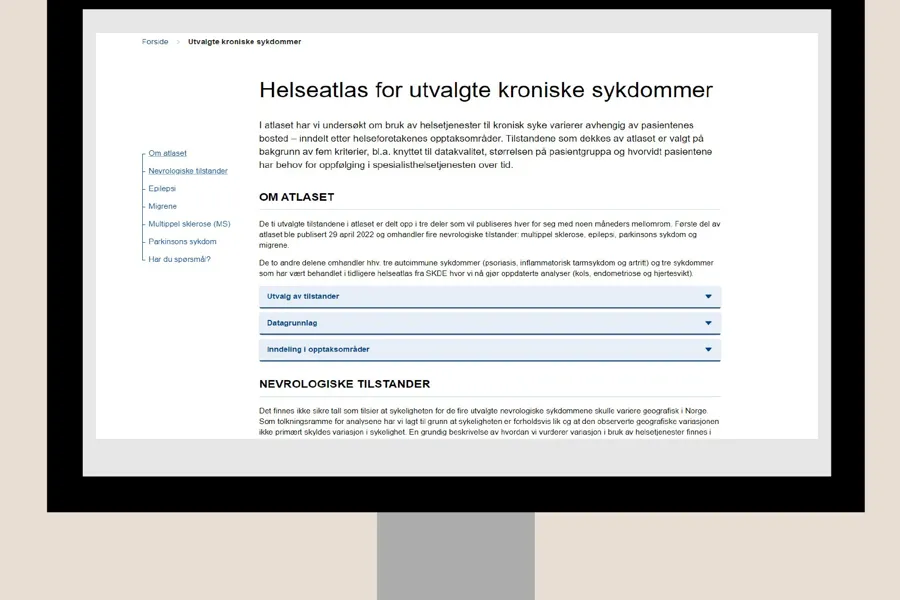
Photo: Skjermdump