Significant geographical differences in the treatment of children
The analyses in the Child Health Atlas, which was recently launched at Gardermoen, show that there are significant geographical differences in the treatment of children.
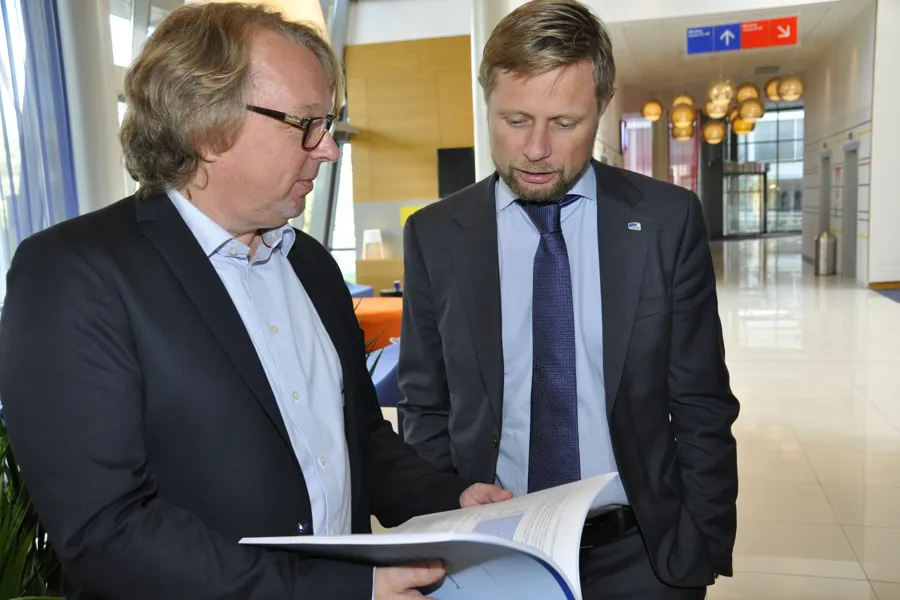
Photo: SKDEs arkiv
This received significant media attention when the children's health atlas was launched on 29 September. The Minister of Health and Care Services, Bent Høie, officiated at the opening and stated that there is a need to continue working on this issue.
– There is reason to question whether resources are being used correctly when it comes to healthcare services for children. Perhaps there are groups that should receive more resources, such as children who are victims of neglect or have complex chronic illnesses. We must prioritise efforts where the need is greatest. We have had too little knowledge about the distribution of healthcare services, but now we have data that can provide professionals with a basis for good discussions, so that we can achieve a good and equitable practice, said Høie.
Aftenposten: Significant geographical differences in the treatment of children
Aftenposten: There may be overuse of healthcare services for children
Significant Differences
Norwegian children's health is among the best in the world, but one third of Norwegian children come into contact with specialist healthcare services each year. Annually, a total of 2.65 million consultations are conducted in primary and specialist healthcare services.
Consultant Atle Moen from the neonatal department at Oslo University Hospital, who initiated the atlas, believes this may indicate overuse. The atlas also shows that there are significant differences in the use of healthcare services between geographical areas. Here are some of the findings in the report:
• For example, children with asthma in Akershus are almost four times more likely to consult specialist healthcare services than children in Vestfold.
• Nearly twice as many are admitted to the hospital in Vestfold compared to Vestre Viken and Oslo University Hospital.
• Children in Nord Trøndelag have ear tubes inserted three times more often than children in Bergen.
– There is nothing to suggest that there are geographical differences in children's morbidity. All Norwegian children's departments use the same guidelines for treatment and prioritisation, so why is it assessed so differently, asks Moen. He refers to what he calls supply-sensitive variation – where there is good access to healthcare services, there is also higher consumption.
Over-investigation
Moen also points out that the variation may lead to certain patient groups not receiving the treatment they should have.
– We know that more healthcare services do not necessarily mean better health. The higher the consumption, the lower the patient satisfaction. One might ask whether we are contributing to the medicalisation of children's upbringing. Whether we are pathologising healthy, normal children. We also know that there is a 20 per cent chance of experiencing patient harm when admitted to hospital, he says.
Ingebjørg Fagerli, head of the Norwegian Paediatric Association, also raised the issue of over-investigation.
– Those of us working in outpatient clinics often feel that we are spending time on healthy children, as opposed to children with chronic illnesses who need it more. Now we must use the report to help each other improve and compare our practices. Some of the differences are likely related to how we apply the guidelines, culture and tradition, and not least capacity. When space is tight, the criteria for admission will become stricter, she says.