The registers contain an enormous amount of knowledge.
Cato Kjærvik has uncovered unwanted variation in hip fracture surgeries in Norway through his research. He utilised data from the National Hip Fracture Register and is full of praise for the assistance he received.

Photo: Shutterstock
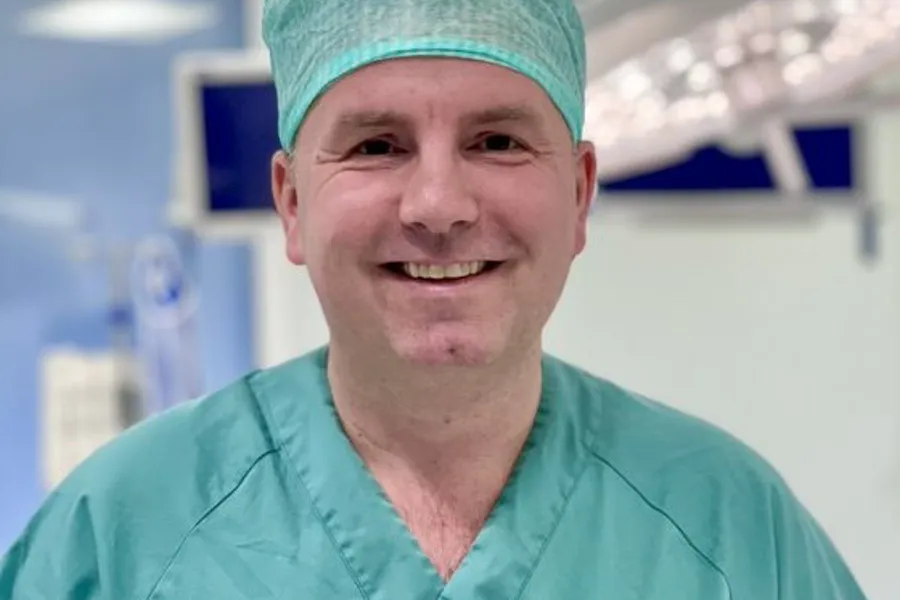
Cato Kjærvik is a specialist in orthopaedic surgery and has researched how long hip fracture patients in Norway must wait before they are operated on. Furthermore, he has examined which factors influence waiting times and the negative consequences this has for patients.
In total, 37,708 hip fractures from the years 2014—18 are included in the study. As a basis, Kjærvik has utilised data from the National Hip Fracture Register and linked it with data from Norwegian patient data, Statistics Norway, and the cause of death register.
— The Hip Fracture Register has been extremely helpful in the research process. There are dedicated people working there with immense knowledge of the data. They understand the strengths and weaknesses of all the variables, which has been of great benefit to me. They have supported and assisted, and are also co-authors on the articles. Moreover, it has been quick to obtain the data I needed, says Kjærvik, who is a PhD student at UiT The Arctic University of Norway and affiliated with the Klin.reg study at SKDE.
Increased waiting time leads to increased mortality
Using the data, he and his co-authors in the study have shown that only 55 per cent of hip fracture patients in Norway receive treatment according to established guidelines. A quality indicator for hip fracture operations is, for example, that patients should be operated on within 48 hours. This means that 80 per cent should be operated on within 24 hours, and 90 per cent within 48 hours.
— Several hospitals struggle to achieve this. The additional waiting time proves to be dangerous for the oldest patients. Even if one only waits one day after admission before operating, the mortality rate for this patient group increases by 20 per cent, says Cato Kjærvik.
Whether patients are treated at one of the larger or smaller of the 43 hospitals included in the study does not seem to have any significance for waiting times or treatment practices.
— There are also no regional correlations. For example, there can be significant differences between two neighbouring hospitals. So the question is whether state guidelines have a strong enough effect. Perhaps there are other factors that influence more. For instance, at some hospitals, there are professionals with strong opinions on how practice should be, and then it becomes that way.
Photo: Shutterstock
Unexpected and undesirable variations found
However, the treatment practices in Norway should not vary to any significant degree. About 10 years ago, a paradigm shift occurred in hip fracture treatment. Surgeons began to insert prostheses (replace the joint) instead of repairing hip fractures with screws. Both in American and European research and clinical environments, there was consensus that prostheses were the best treatment.
What is also particularly notable about hip fracture patients is that they are often older, and many of them have dementia. The average patient is 82 years old and female.
— Hip fracture patients rely on us as doctors to make good choices for them, as they are often unable to make decisions about their own treatment and make patient choices. Usually, patients are much more actively involved when it comes to making decisions about their own treatment, says Cato Kjærvik, further pointing out:
— When there are such coordinated guidelines and practically no patient choices, one would expect zero variation in hip fracture operations in Norway. Yet it turns out that there is variation.
Encourages greater use of the registers
The results of the study would not have been possible to achieve without the help of the Norwegian Hip Fracture Register. Cato Kjærvik also encourages other researchers to make greater use of data from the medical registers.
— The registers contain an incredible amount of knowledge. And it is unique – no hospital in Norway is close to achieving such data volumes on their own. There is also a strong desire from the registers that the data should be used. By analysing the data available, we can find out what we should change and what we can learn from. It is an active use of the retrospective lens, where we get answers to what has actually been done. Then we can assess whether this is how we should continue doing things, or if we need to change something. In this way, the registers can contribute to quality improvement.
Cato Kjærvik's research has been published in the journal Bone & Joint Open.