This shortens the life of hip fracture patients.
Older patients have an increased mortality rate following a hip fracture, but those with a high income live on average nearly two years longer than those with a low income. — Surprisingly large differences in life expectancy, says the researcher behind the study.
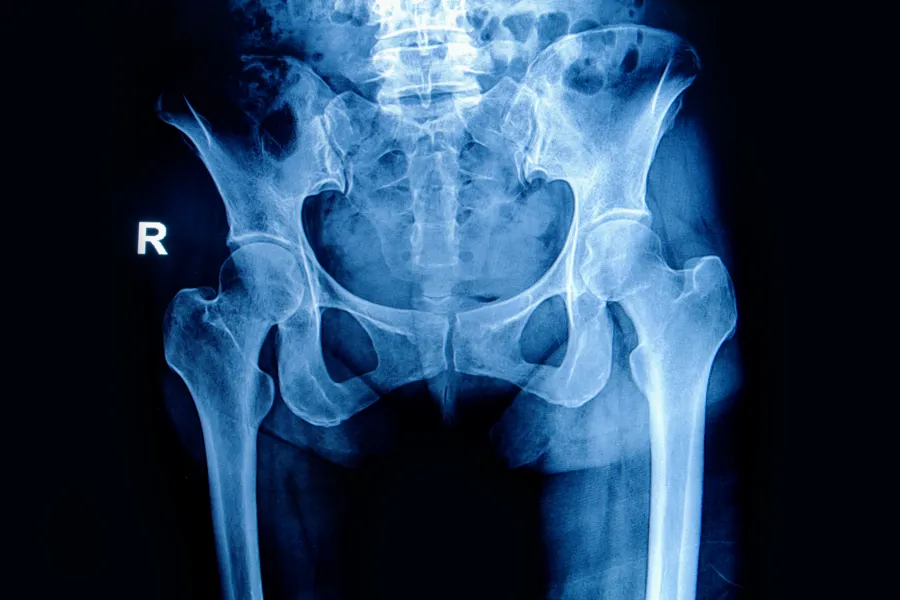
Photo: Colourbox
To sustain a hip fracture after the age of 65 is undoubtedly a significant strain on the body. It is already known that this patient group has a high mortality rate following a hip fracture. A recent study of 37,708 hip fractures in Norway from 2014 to 2018 shows that these patients have a considerably shorter life expectancy compared to a comparable segment of the population.
The mortality rate is particularly high in the first three months following the hip fracture. However, even six years later, there is still an excess mortality of as much as 41 per cent in this group compared to the rest of the population.
When examining how many people die in a population and finding that it is more than normal, this is often referred to as excess mortality. Some groups, such as hip fracture patients, may therefore have a higher mortality rate than one would expect.
But what contributes to the high excess mortality among hip fracture patients, and which patients are most at risk of dying earlier? Orthopaedic specialist Cato Kjærvik at Nordland Hospital has investigated this in his doctoral research.
Low education, low income = increased mortality
What characterises the group with the highest risk of dying as a result of a hip fracture is that they often have low education and low income.
— The study shows that if you have a higher education, you also live much longer. On average, patients with higher education live 1,400 days after a hip fracture, which is 200 days longer than those with low education. If you have a high income, the difference is even greater. You live on average 1,600 days after a hip fracture, which is 600 days more than those with low income. That is nearly two years longer for those with high income, and it is a significant difference, points out Cato Kjærvik, who is affiliated with the KlinReg study at the Centre for Clinical Documentation and Evaluation (SKDE).
The fact that high income and high education provide a health advantage is not new to researchers. However, Kjærvik finds it surprising that the effect of education and income remains so strong even after patients have reached old age. The income he based his findings on was that of the patients in the year prior to the fracture, and for most, this pertains to pensions.
No advantage to being a male hip fracture patient
It also turns out that men are more likely to die after a hip fracture compared to women. This difference in mortality is greatest immediately after the fracture, but over time it gradually levels out.
— Men make up only a third of all hip fracture patients. But even when we adjust for all other factors, women have a 30 per cent lower mortality rate than men. We do not know why. One hypothesis has been that men seem to tolerate sudden stresses worse than women. Research from Sweden suggests that it is not necessarily random who fractures their hip. Often, it is people who are more frail than average. Frailty increases the risk of hip fractures, which in turn raises the risk of dying as a result of the fracture, explains Cato Kjærvik.
He does not find it surprising that increasing age and comorbidity (having more than one disease simultaneously) play a role in mortality following a hip fracture. Nor that place of residence has an effect.
— Based on the figures, one can see that those in nursing homes have an increased risk of dying after a hip fracture. At the same time, we know that those living in nursing homes often have poorer health than those living at home, so this is not so surprising.

Photo: Cato Kjærvik
A positive finding for the hospital sector
Income, education, gender, place of residence, age, and comorbidity — what these factors have in common is that they are related to the patient themselves. They are what we can call non-modifiable factors, and there is nothing doctors and nurses can do about them.
However, there are also factors that are modifiable. These are so-called system-related factors, such as where you are operated on – in Northern Norway or Southern Norway, whether it is a large or small hospital, whether they perform many or few surgical procedures, and how long the waiting time for surgery is. If these factors contribute to higher mortality, then it is something that can and should be addressed.
— This study shows that fortunately, the modifiable factors matter relatively little. They make smaller differences than the patient-related factors. The treatment patients receive is quite similar, which is good. In other words, it is safe to receive treatment for hip fractures throughout the country, and that is a positive finding. However, this does not mean that one can stop striving for optimal treatment of hip fractures.
Important to maintain strength and balance
Cato Kjærvik emphasises that everyone who treats hip fractures should also be aware of the factors they cannot influence.
— This gives us the opportunity to identify patients who are at the highest risk of dying earlier, and where we need to intervene. To find out who should receive the right treatment at the right time. Who needs what kind of care, and who needs that little extra, he says.
Additionally, there are some steps one can take to reduce the risk of falling and fracturing a hip with the associated consequences:
— Challenge your balance! We accommodate a lot today, for example, to avoid people moving between floors or on uneven surfaces. But if you only walk on flat surfaces all the time, you may over time develop poorer balance. Also, make sure to stay active. Go to senior dance instead of sitting still. We know that it is a disadvantage to remain inactive over time. That is why newly operated patients must get up and walk early after surgery, even if they may find it tiring at the time. It is not good to remain still for long periods, especially for older people, as it will take them much longer to recover. Younger people should also be aware of challenging their strength and balance. It is your own health that you must take care of. So go for that jog or hike now — this is an investment for the future.
The defence will be held at Nordland Hospital, Stokmarknes department (Vesterålen).
You can read his entire article in The Bone and Joint Journal.
FACTS about the study
-
37,708 hip fractures in Norway from 2014 to 2018 are included in the study.
-
Data has been collected from the National Hip Fracture Registry and linked with data from the Norwegian Patient Registry (NPR), Statistics Norway (SSB), and additionally, a mapping of all 43 hospitals in Norway that treat hip fractures has been conducted.
-
The average age was 80.2 years, and 67.5 per cent were women.
-
The study shows that the non-modifiable risk factors were more strongly associated with mortality than the modifiable risk factors. Non-modifiable risk factors included gender, income, education level, place of residence, and comorbidity (having more than one disease simultaneously). Modifiable factors included waiting time for surgery and capacity at the hospitals.